
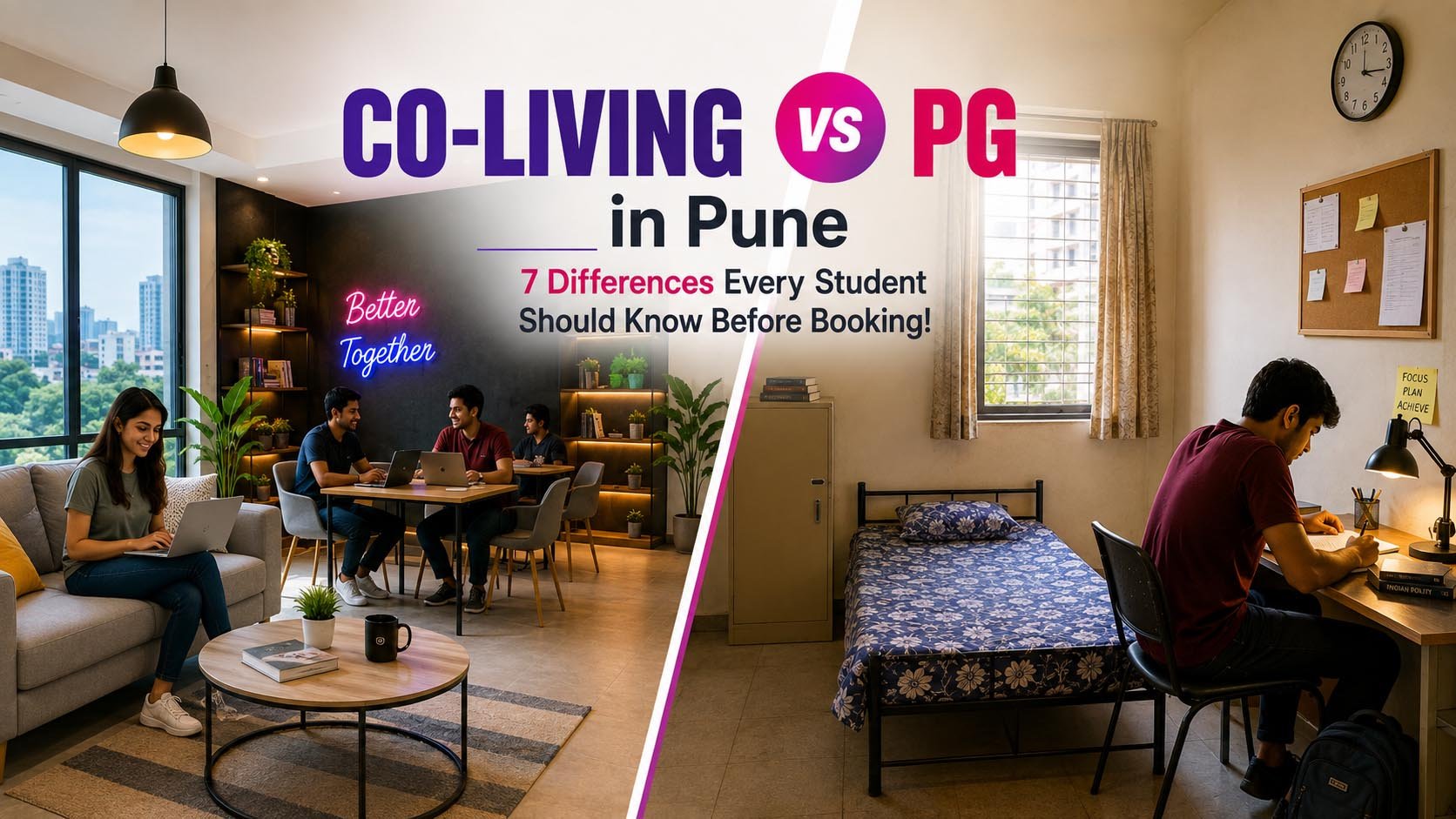
That ₹8,000 PG listing in Wakad? By the time you add electricity (billed separately), laundry, and the “maintenance charge” nobody mentioned upfront, you’re looking at ₹10,000–₹12,000 actual monthly spend. Hidden charges add 20–30% to advertised PG rates across Pune, turning budget calculations into guesswork.
This is the first of seven differences between coliving PG in Pune and traditional PG accommodation that most students discover too late. Whether you’re heading to DY Patil, NICMAR, or Symbiosis, understanding these gaps before booking saves money, stress, and awkward calls to parents explaining why the rent went up.
What’s the Real Cost Difference Between Coliving and PG in Pune?
The sticker price tells half the story. PG in Pune for students advertises ₹6,000–₹12,000/month for double sharing, but that baseline rarely includes everything you need.
| Cost Component | Traditional PG | Coliving |
|---|---|---|
| Base rent (double sharing) | ₹6,000–₹12,000 | ₹10,000–₹20,000 |
| Electricity (summer AC) | ₹1,500–₹2,000 extra | Included |
| Wi-Fi | Often extra or unreliable | High-speed included |
| Laundry | Self-service or extra | Included |
| Meals | Sometimes included | Usually included |
| Actual monthly total | ₹9,000–₹15,000 | ₹10,000–₹20,000 |
The PG vs coliving difference shrinks dramatically when you account for everything. Coliving operators bundle housekeeping, Wi-Fi, and maintenance into rent with no hidden costs, making budget planning straightforward.
Yukio’s Tip: Ask any PG for an itemized breakdown of every possible charge before signing. If they can’t provide one, that’s your answer.
Why Do Deposits Disappear at Checkout?
Here’s a pattern students know too well: pay ₹10,000 deposit, get back ₹5,000 (or nothing) after deductions for “wall marks,” “mattress cleaning,” and vague “admin charges.”
Traditional PG deposits run 1–2 months’ rent, theoretically refundable but practically negotiable with whoever manages the property. Managed PG coliving operators standardize at one month’s deposit with documented check-in/check-out processes, leaving less room for creative deductions.
The difference matters more than the amount. A clear refund policy beats a larger deposit that evaporates when you leave.
How Different Are Safety Standards Between PG and Coliving?
Traditional PGs often lack standardized safety protocols, proper legal compliance, and building codes. Fire safety, surveillance, and emergency exits vary wildly from one landlord to the next.
Coliving spaces in Pune operate differently:
- 24/7 CCTV surveillance and security personnel
- Biometric or keycard entry systems
- On-site staff for grievance resolution
- Structured, regulated environments
For women students especially, this gap matters. Parents calling to check on safety get concrete answers from coliving operators: specific floor access, staff details, entry protocols. From a PG landlord, they might get “don’t worry, it’s safe.”
What About Rules and Flexibility?
The 10–11 PM entry restrictions, limited visitor policies, and vegetarian-only food options at traditional PGs serve a purpose, but they also limit how you live.
Modern PG vs coliving Pune shows the contrast:
| Restriction | Traditional PG | Coliving |
|---|---|---|
| Entry timing | 10–11 PM curfew is common | 24/7 access |
| Visitors | Limited or prohibited | Usually allowed |
| Kitchen access | Often restricted | Fully equipped common kitchens |
| Lease flexibility | Monthly/quarterly fixed | Week to extended stays |
Coliving offers greater flexibility and freedom without stringent late-night or guest restrictions. When your study group runs late, or a friend visits from out of town, you’re not scrambling to explain yourself to anyone.
Who Actually Manages the Place?
Traditional PG means a residential home where a landlord rents spare rooms. Quality varies. Rules can be arbitrary. The relationship is transactional, and disputes often end in “take it or leave.”
Colive PG in Pune spaces operate as purpose-designed properties with professional, responsive management. When something breaks, there’s a system for fixing it. When you have a complaint, there’s a process that doesn’t depend on catching the landlord in a good mood.
Transparent pricing helps too: rent plus actual electricity usage, with Wi-Fi, housekeeping, and security included. One bill, no surprises.
What About Community and Social Life?
One of the biggest differences between a traditional PG and a coliving space isn’t visible on a pricing sheet. Most PGs operate as accommodation only. Students live in separate rooms, come and go independently, and interactions with other residents are largely incidental.
Coliving is intentionally designed around community. Shared lounges, gaming areas, common dining spaces, and organized resident activities make it easier to meet people, especially for students moving to Pune for the first time.
For outstation students, this can significantly reduce the isolation that often comes with relocating to a new city. Building friendships, finding study partners, and connecting with seniors often happen naturally when the living environment encourages interaction.
Does Study Infrastructure Really Make a Difference?
For students, accommodation is more than a place to sleep. It is also where assignments get completed, presentations get prepared, and exams get studied for. Most traditional PGs provide a bed, storage, and basic furniture. Beyond that, study conditions vary widely. Shared rooms can be noisy, Wi-Fi speeds may fluctuate during peak hours, and dedicated study areas are uncommon.
Coliving spaces increasingly include features designed specifically for student productivity:
- High-speed Wi-Fi
- Dedicated study rooms or co-working pods
- Quiet zones for focused work
- Reliable power backup
- Common areas for group projects and discussions
The difference becomes especially noticeable during exam periods, placement season, or internship applications, when students spend long hours studying or attending online assessments.
Yukio’s Take
The seven differences above boil down to one question: do you want accommodation or a living environment? Traditional PGs prioritize affordability over experience. Coliving prioritizes reducing friction so you can focus on why you moved to Pune in the first place. For students balancing coursework, internships, and building a social life in a new city, that friction reduction isn’t a luxury. It’s the difference between surviving a semester and actually enjoying it.
What Does This Mean for Students Near Hinjawadi and Wakad?
Students at DY Patil, NICMAR, or Symbiosis often face the location premium trap. Properties in Hinjawadi Phase 1–2 charge 20–30% more than areas like Baner, but saving ₹3,000/month on a distant PG adds transport costs and commute time that eat those savings.
Yukio Gates, located near Wakad Metro Station and Hinjawadi Phase 3, addresses this directly. At ₹19,950–₹26,500/month all-inclusive, the pricing covers three meals daily, laundry, housekeeping, high-speed Wi-Fi, gym access, gaming zones, and co-working pods. Dedicated student floors (6th, 7th, and 8th for women with all-women staff; 17th floor in the adjacent Yukio Jobs property) create a focused peer environment. Zero brokerage, one-month standardized deposit, and up to 11% discount on 11-month tenure make the math work for students and parents both.
The smarter filter for your Pune search
The accommodation question isn’t just about cost. It’s about what you’re willing to manage yourself versus what you’d rather have handled. Traditional PGs work for students who want minimal spending and don’t mind navigating variable quality. Coliving works for students who want predictability, community, and fewer daily decisions about basic living logistics.
See it before you decide
Yukio Gates offers property tours for students and parents. Visit yukio.in to book a walkthrough, or contact the team directly to ask questions the website doesn’t answer.
Frequently Asked Questions
How much should I budget for a PG in Pune as a student?
Most students target ₹7,000–₹10,000/month for accommodation, but actual costs often run 20–30% higher after hidden charges. Budget ₹9,000–₹13,000 for a realistic double-sharing PG total, or ₹19,000–₹27,000 for all-inclusive coliving.
Is coliving safer than traditional PG for women students?
Coliving typically offers CCTV surveillance, biometric entry, and on-site staff as standard features. Traditional PGs vary significantly; some have basic security while others lack proper systems entirely. Parents should ask specific questions about entry protocols and staff presence.
Do I need a local guardian to book a PG in Pune?
Some women’s PGs require local guardians or charge additional “admin fees” without one. Coliving operators generally don’t impose this requirement, making them more accessible for outstation students without Pune contacts.