
Students relocating to Pune expect to spend around ₹8,000 a month on accommodation. The actual number? Closer to ₹15,000–₹20,000/month once food, transport, electricity, and the occasional weekend outing enter the picture. That ₹6,000 PG listing suddenly looks less like a bargain and more like a starting point for a much longer bill.
This guide breaks down coliving in Pune for students arriving in 2026: what it actually means, how it compares to traditional PGs, which neighborhoods make sense for your college, and what the real costs look like when everything is added up. Whether you are comparing options or your parents are doing the math alongside you, this covers the numbers that matter.
What Does Coliving in Pune Actually Mean?
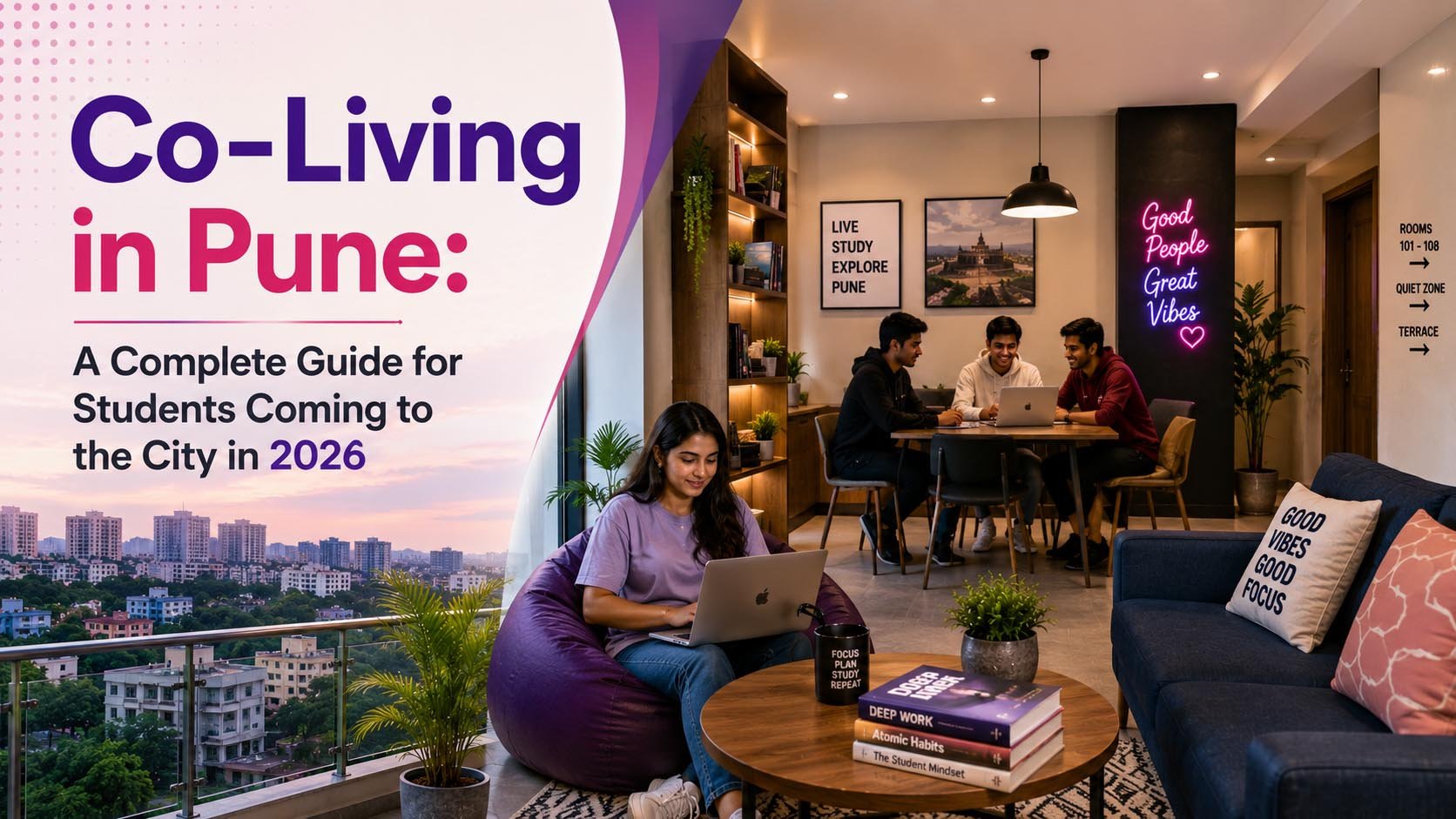
The term gets thrown around loosely, so clarity helps. Coliving is a fully furnished, professionally managed rental format offering private or shared bedrooms with access to shared lounges, dining areas, and quiet work zones. Housekeeping and maintenance are handled by the operator, not negotiated with a landlord.
Pune coliving differs from a traditional PG in several ways. PGs typically offer meals and basic housekeeping, managed by individual landlords with varying consistency. Coliving spaces add high-speed Wi-Fi, coworking zones, gyms, and gaming areas as standard inclusions. The management is professional, with documented guest policies, housekeeping schedules, and staff accountability.
The trade-off? Coliving spaces in Pune cost more upfront. Shared rooms start at ₹7,499/month, with premium double-sharing reaching ₹23,000 in prime areas. PG shared rooms range from ₹6,000–₹12,000/month. The question is whether that gap represents a lifestyle upgrade or just a higher rent number.
Yukio’s Tip: Ask any coliving operator for a full amenity list in writing before booking. Verbal promises about Wi-Fi speeds or housekeeping frequency are worthless when the router dies during exam week.
Why Students Started Choosing Coliving
Traditional student housing was designed primarily around affordability. For years, the goal was simple: find a bed close to campus at the lowest possible price.
Today’s students evaluate accommodation differently. They need reliable Wi-Fi for online classes and assignments. They need quiet study spaces for exams and project work. Many juggle internships, group projects, networking events, and campus activities alongside academics. They also value community, professional management, and lease flexibility.
As student expectations evolved, the accommodation market evolved with them. Coliving emerged because students stopped looking only for a place to sleep and started looking for infrastructure that supports how they actually live, study, and work.
The shift is especially visible in cities like Pune, where students often spend multiple years away from home. A room is no longer just a room. It is a study space, a workplace, a social environment, and, for many students, their primary living ecosystem for the duration of their degree.
Why the ₹6,000 PG Often Costs ₹12,000
The hidden cost trap catches most first-time students. A PG advertised at ₹8,000/month often charges extra for food, electricity, or cleaning. Add a dabbawala service at ₹3,000–₹4,000/month if meals are not included, plus ₹600–₹1,500 for a bus pass and another ₹2,500 for auto rides. That ₹8,000 room now costs ₹14,000 minimum.
Here is how the math typically plays out:
| Expense Category | Basic PG | Coliving (All-Inclusive) |
|---|---|---|
| Base Rent | ₹6,000–₹12,000 | ₹10,000–₹22,000 |
| Food (if separate) | ₹3,000–₹4,000 | Included |
| Electricity | ₹500–₹1,000 | Included |
| Wi-Fi | ₹300–₹500 | Included |
| Gym Membership | ₹1,500–₹5,000 | Included |
| Realistic Total | ₹12,000–₹18,000 | ₹10,000–₹22,000 |
Students in PGs with food included wrap up monthly costs at ₹12,000–₹18,000 after transport and weekend expenses. The coliving “premium” often disappears when everything is bundled.
Which Pune Neighborhoods Work for Students?
Location choice directly affects commute time, which affects study time, which affects grades. The Pune Metro Aqua Line connects Vanaz (Kothrud) to Viman Nagar (Ramwadi), making these corridors useful for students at colleges along that route.
Hinjawadi presents a different picture. The area houses major IT campuses and attracts engineering and management students for internships. But Hinjawadi Phase 1–3 remains dependent on road transport. Peak traffic from Wakad to Hinjawadi Phase 3 can extend 25-minute rides to 45–60 minutes.
Student-friendly co-living spaces in Pune cluster in Viman Nagar, Karve Nagar, and Bibwewadi due to proximity to colleges and coaching centers. Wakad works well for students with Hinjawadi internships who want metro access without the worst traffic. The rent premium of ₹2,000 more per month often pays for itself in saved commute hours over a semester.
Coliving Rules and Amenities Pune Students Should Expect
Branded coliving typically involves a 3–6 month lock-in period with early exit penalties. Most require a 30-day notice period; leaving without notice can mean forfeiting the entire deposit. Security deposits are usually one month’s rent, refunded within 15–21 working days at managed properties. PG deposit disputes, by contrast, are extremely common.
Standard coliving rules and amenities Pune operators offer include:
- Fully furnished rooms with AC
- High-speed Wi-Fi
- Daily or weekly housekeeping
- Laundry facilities
- Gym and lounge access
- 24/7 security with CCTV and biometric entry
For female students specifically, professionally managed coliving provides controlled access, staff verification, and women-only floors with all-women on-site staff. This matters for parents evaluating safety alongside students evaluating amenities.
Yukio’s Take
The real question is not “PG or coliving?” but “what am I actually paying for and what am I getting?” A ₹6,000 PG with hidden charges, landlord inconsistency, and a 45-minute commute costs more than it appears in time, stress, and actual rupees. A coliving space at ₹20,000 with meals, laundry, gym, and a 15-minute commute might be the economical choice. The right answer depends on your specific college location, your tolerance for daily life friction, and whether you want to spend your first semester sorting out groceries or focusing on academics.
Yukio Gates, located near Wakad Metro Station and Hinjawadi Phase 3, offers an example of how coliving works in Pune for students specifically. At ₹19,950–₹26,500/month all-inclusive (three meals daily, housekeeping, laundry, high-speed Wi-Fi, gym, gaming zone, co-working pods), the pricing covers what most students would spend ₹18,000+ assembling separately. The property has dedicated student floors (6th, 7th, and 8th floors for female students, with all-women staff), biometric entry, and keycard access. Discounts of up to 11% apply for 11-month tenures.
The Smarter Starting Point for Your Pune Chapter
The accommodation decision shapes the next two to four years. Get it right, and daily life runs smoothly enough to focus on what actually matters. Get it wrong, and every semester includes a side quest of landlord negotiations, commute frustrations, and surprise bills.
Understanding Pune coliving meaning and comparing the real numbers puts you ahead of students who chose based on the listed rent alone.
See the difference in person
Visit yukio.in to book a tour of Yukio Gates. Walk through the student floors, check the Wi-Fi speed yourself, and see whether the all-inclusive math works for your situation.
Frequently Asked Questions
How does coliving work in Pune compared to renting a flat independently?
Coliving handles furnishing, utilities, housekeeping, and maintenance through a single monthly payment. Independent rentals require arranging and paying for each separately, plus brokerage (typically one month’s rent) and higher deposits (1–2 months). For students staying one to three years, coliving eliminates setup hassle and exit complications.
What security features should parents look for in Pune coliving spaces?
Professionally managed coliving provides CCTV surveillance, biometric entry, staff verification, and 24/7 security personnel. Women-only floors with all-women on-site staff add an additional layer for female students. Ask for documented security protocols rather than verbal assurances during property visits.
Are coliving deposits refundable, and how long does it take?
Managed coliving operators typically refund deposits within 15–21 working days after move-out. Most require 30 days’ notice; leaving without proper notice can forfeit the entire deposit. PG deposit disputes are common and lack standardized resolution timelines, making coliving’s documented process more reliable for students moving out post-graduation.