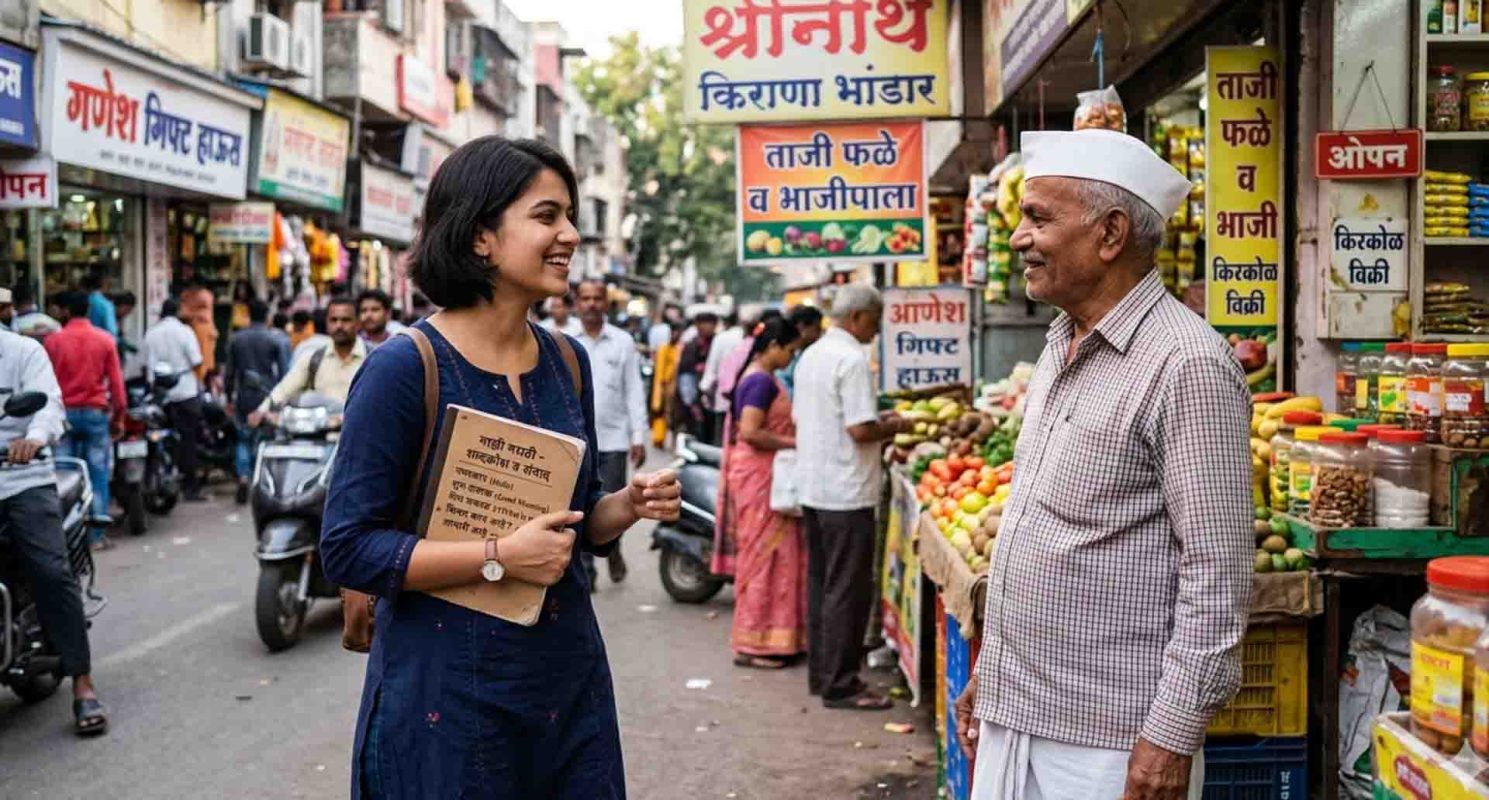
Landing in Pune for that Hinjawadi job means navigating a city where 40% of the population speaks Marathi as their primary language. The good news: you don’t need fluency to survive. The better news: learning 20-30 practical phrases transforms daily interactions from stressful negotiations into smooth transactions. This is especially true in Hinjawadi Phase 1 and Wakad, where auto drivers, PG owners, and street vendors default to Marathi before Hindi or English.
Here’s what matters for professionals relocating to Pune: basic Marathi isn’t about impressing colleagues, it’s about saving time, money, and mental bandwidth. That auto ride to Rajiv Gandhi Infotech Park becomes ₹80-120 instead of ₹150-200 when you negotiate in Marathi. The PG deposit conversation stays at 2 months instead of creeping to 3. This guide covers essential basic Marathi for beginners, the phrases that actually show up in your first month, organized by the situations where you’ll need them most.
Yukio Tip: Try out all these phrases using Google Search or Google Translate to hear the correct way of pronouncing them.
Why Auto Drivers Respond Better When You Say “Dada, Hinjawadi cha”
The daily Hinjawadi commute runs smoother with directional phrases that drivers understand instantly. In peak traffic (8:30-10:00 AM), clarity matters.
Essential Direction Phrases:
| Marathi Phrase | Meaning | When to Use |
|---|---|---|
| Pudhe chala | Go forward | Giving directions |
| Dahine vala | Turn right | Navigating lanes |
| Ujave vala | Turn left | Traffic diversions |
| Thamba | Stop | Reaching destination |
| Hinjawadi cha | To Hinjawadi | Stating destination |
Numbers 1-10 (Ek, Don, Teen, Chaar, Paach, Saha, Saat, Aath, Nau, Daha) matter for fare negotiations. When the driver quotes “Sau rupaye” (₹100), responding with “Ainshi rupaye” (₹80) in Marathi signals you’re not the typical newcomer tourist.
The real advantage: addressing drivers as “Dada” (respectful “bro”) before stating your destination. “Dada, Rajiv Gandhi Infotech Park, kiti?” gets a fair quote more often than an English request. Drivers appreciate the effort, and studies on language accommodation show locals respond better to second-language attempts than no attempt at all.
Yukio’s Tip:
During monsoon season (June-August), practice “Sarala” (straight) and “Dahine vala” (turn right) before your first week. Flooded roads mean frequent route changes, and drivers explain alternatives in rapid Marathi so knowing directional words prevents getting lost.
PG Negotiations and the Shopping Phrases That Save Money
Wakad and Hinjawadi rentals involve Marathi-speaking owners who default to their first language during negotiations. Five phrases handle most interactions:
Shopping & Rental Phrases:
| Marathi Phrase | Meaning in English | When to Use |
|---|---|---|
| Kiti? / Kiti paisa? | How much? | Asking rent, deposit, food cost, grocery prices |
| Nakko | No / Don’t want it | Politely refusing extra charges or upsells |
| Naahi / Nahi | No | General refusal or disagreement |
| Aani | And | Asking about multiple charges/items together |
| Khali | Down / Ground floor | Asking about room location |
| Var | Up / Upstairs / Upper floor | Asking about upper-floor rooms |
Here’s the practical application: When a PG resident says “Deposit kiti? Aani maintenance?” they’re asking about deposit and maintenance separately. Responding “Doan mahine” (2 months) plus clarifying “maintenance included?” prevents surprise bills.
The phrase “Nakko” politely declines extras landlords try adding, like furniture fees, key deposits, and “building maintenance funds”, that weren’t in the original quote. Street vendors near Xion Mall respond well to “Tikhat” (spicy) when ordering food. The phrase “Tikhat banva” (make it spicy) gets you proper Pune-style vada pav instead of the toned-down version they assume North Indians want.
Pune Slang That Actually Matters for Professionals
Academic greetings like “Namaskar” work in formal settings, but daily Hinjawadi life runs on casual phrases. Theek aahe (okay/all good) is the Swiss Army knife of Pune slang, acknowledging PMPML bus announcements, confirming meeting times with roommates, and agreeing to restaurant choices.
High-Use Casual Phrases:
| Marathi Phrase | Meaning in English | When to Use |
|---|---|---|
| Theek aahe | Okay / Sounds good / All good | Universal everyday response |
| Ho | Yes | Basic agreement |
| Nakko/ Nahi / Naahi | No | Basic disagreement or refusal |
| Baaprey! | Wow! / Oh my! | Expressing surprise or shock |
| Namaskar | Hello / Greetings | Formal or respectful greeting |
| Dada | Respectful “bro” | Casual but polite way to address men |
Gender matters in Marathi greetings. “Kasa aahes?” (How are you?) works for male listeners; “Kashi aahes?” for female listeners. The response “Mi changla aahe” (I’m good) stays the same. At coliving mixers or office introductions, starting with the gender-appropriate greeting shows cultural awareness beyond tourist-level phrases.
Emergency phrases stay simple: “Madat kara” (help me), “Doctor hava” (need doctor), “Paani pahije” (I want water). These functional phrases matter more than elaborate conversational Marathi for the first 3-6 months.
Quick Reference: Most Useful First-Week Marathi Phrases
| Situation | Phrase | Meaning |
|---|---|---|
| Auto ride | Dada, Hinjawadi cha | Brother, to Hinjawadi |
| Fare check | Kiti? | How much? |
| Direction | Pudhe chala | Go straight |
| Direction | Dahine vala | Turn right |
| Direction | Ujave vala | Turn left |
| Stop ride | Thamba | Stop |
| Rental question | Deposit kiti? | How much is the deposit? |
| Declining extras | Nakko | No / Don’t want it |
| Food order | Tikhat banva | Make it spicy |
| Casual response | Theek aahe | Okay / Sounds good |
| Emergency | Madat kara | Help me |
| Medical attention | Doctor hava | Need a doctor |
Speak a Little Marathi, Settle Into Pune Faster
Learning basic Marathi won’t make you a local overnight, but it will absolutely make your first few weeks in Pune smoother. From fairer auto fares to easier PG conversations and less awkward food orders, these small phrases remove daily friction and help you feel more confident in a new city. When you’re relocating for work, that kind of ease matters more than perfect grammar ever will.
And if you want the rest of your move to feel just as seamless, your living setup matters too. Yukio Coliving in Hinjawadi and Wakad is built for professionals who want fewer relocation headaches and more day-one comfort—fully furnished rooms, chef-curated meals, housekeeping, reliable Wi-Fi, and a community that understands your schedule. So while you’re mastering “Dada, Hinjawadi cha,” Yukio helps with the bigger win: settling into Pune faster, with less stress and a lot more ease.
Frequently Asked Questions
Do I need to learn Marathi to work in Pune’s IT sector?
No. Office environments in Hinjawadi use English as the primary working language. However, learning basic Marathi helps with daily logistics: auto rides (₹80-120 vs ₹150-200), PG negotiations (avoiding extra deposit demands), and street food orders. Most professionals pick up 20-30 essential phrases within 3-4 weeks through daily exposure.
Which Marathi phrases help most in Hinjawadi and Wakad?
Directional phrases (Dahine vala, Pudhe chala), shopping terms (Kiti?, Nakko), and numbers 1-10 for fares and deposits. Slang like Dada builds rapport with auto drivers and shopkeepers. Gender-specific greetings (Kasa aahes? for males, Kashi aahes? for females) matter in coliving introductions and office interactions.
Where can professionals in Pune avoid language barriers in accommodation?
English-interface coliving platforms like Yukio handle bookings, contracts, and daily operations without requiring Marathi. All-inclusive rent structures (meals, housekeeping, maintenance) eliminate negotiation needs with local vendors or landlords.