
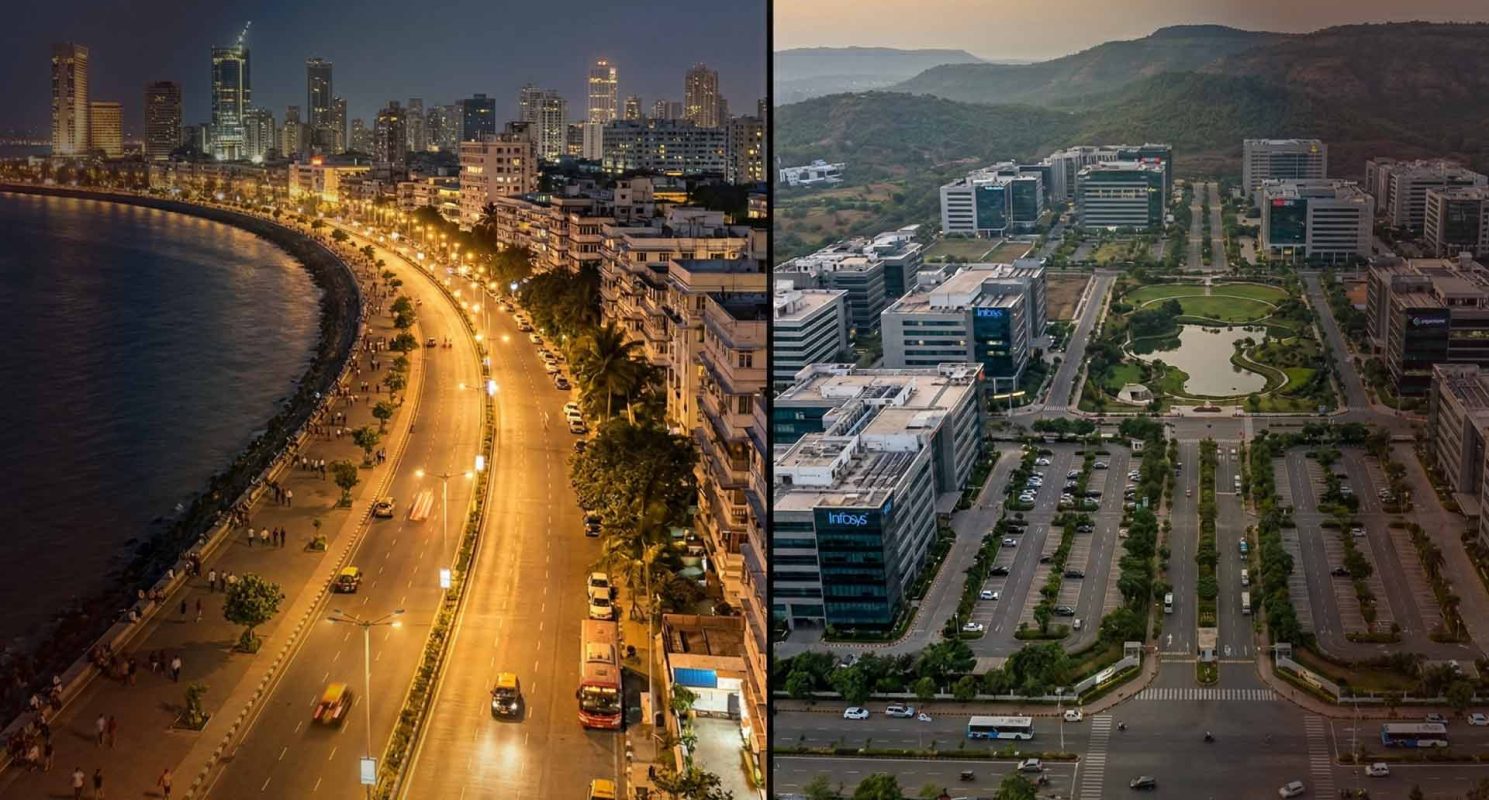
That job offer in Pune looks compelling on paper until you start calculating what’s actually left after rent in Hinjawadi, groceries at D-Mart, and the monthly auto-rickshaw negotiations. If you’re weighing offers across India’s tech hubs, here’s the reality: Pune’s cost of living index sits at 22.6-22.8, cheaper than Mumbai’s 26.4 but marginally higher than Bangalore’s 21.9-22.2 and comparable to Hyderabad’s fluctuating 21.6-24.64. The numbers tell one story; your monthly bank balance tells another.
This breakdown compares the cost of living in Pune vs Mumbai, Bangalore, and Hyderabad across housing, food, transport, and hidden expenses, so you know exactly where your salary disappears and which city genuinely stretches your rupee furthest. Spoiler: the “cheapest” city on paper isn’t always the smartest choice for your career trajectory.
The Housing Reality: Where Pune Wins and Loses
Here’s where the cost of living in Pune vs Hyderabad diverges sharply. Single professionals in Pune spend ₹8,000-₹25,000/month on 1BHK apartments, with premium IT zones like Hinjawadi Phase 1 pushing toward the upper end. Hyderabad offers similar 1BHKs at ₹7,000-₹15,000, but the catch is location—you’re likely farther from major tech parks at the lower price points.
PG and coliving options in Pune range ₹7,000-₹30,000/month depending on amenities, with Hinjawadi and Wakad commanding 20-30% premiums over city averages. Mumbai? You’re looking at significantly steeper numbers—₹30,000-₹60,000 monthly budgets are standard for comparable housing.
| City | 1BHK Rent Range | PG/Coliving Range | Reality Check |
|---|---|---|---|
| Pune | ₹8,000-₹25,000 | ₹7,000-₹30,000 | Hinjawadi Phase 1 sits at the upper end |
| Mumbai | ₹20,000-₹40,000+ | ₹12,000-₹35,000 | Add 1.5-2 hour commutes for “affordable” areas |
| Bangalore | ₹10,000-₹30,000 | ₹8,000-₹25,000 | Whitefield/Electronic City premiums rival Pune |
| Hyderabad | ₹10,000-₹25,000 | ₹6,000-₹20,000 | HITEC City proximity drives pricing |
Yukio’s Tip:
Negotiate PG rent during monsoon season (June-August) when Hinjawadi demand dips. Many landlords offer 10-15% discounts rather than keep rooms empty during the slowest rental period.
But rent is just the entry fee. Furnished apartments add ₹5,000-₹10,000 to monthly costs. Deposits lock up 2-3 months’ rent (₹40,000-₹60,000 in Pune’s IT areas). Brokerage eats another month’s rent. Suddenly, that ₹15,000 apartment becomes a ₹45,000-₹70,000 upfront commitment plus ₹17,000-₹19,000 monthly when you factor in maintenance (₹2,000-₹4,000).
Commute Time Comparison Across Major IT Cities
Commute time is one of the biggest lifestyle differentiators across India’s major tech cities. Compared to larger metros, Pune generally offers shorter daily travel times for IT professionals, especially those working in hubs like Hinjawadi or Baner. While traffic congestion has increased in recent years, Pune’s smaller city footprint still keeps most commutes within an hour, unlike cities such as Mumbai or Bangalore, where longer travel times are common.
| City | Avg IT Commute Time |
|---|---|
| Pune | 30–45 mins |
| Mumbai | 60–120 mins |
| Bangalore | 60–90 mins |
| Hyderabad | 30–60 mins |
The Daily Spend Breakdown in Pune: Food, Transport, and Everything Else
Monthly expenses for single professionals reveal where Pune’s affordability narrative gets complicated.
Food & Groceries — Covers daily grocery runs and eating out, including food delivery. Pune’s food costs sit in the mid-range nationally — pricier than Hyderabad but on par with Bangalore.
| Food & Groceries | Min (₹/month) | Max (₹/month) | Notes |
| Groceries | ₹4,000 | ₹8,000 | Higher than Hyderabad (₹3k–6k); comparable to Bangalore |
| Eating out (per meal) | ₹150 | ₹300 | Mid-range restaurant per meal |
| Swiggy/Zomato (per order) | ₹200 | ₹400 | Average delivery order cost |
| Food delivery (3x/week) | ₹2,400 | ₹4,800 | Monthly cost of ordering delivery 3 times a week |
Transport: Highly dependent on your commute style. Living close to Hinjawadi can significantly cut costs compared to Mumbai-style long-distance daily travel.
| Transport | Min (₹/month) | Max (₹/month) | Notes |
| PMPML monthly pass | ₹1,000 | ₹3,000 | Public bus monthly pass |
| Auto-rickshaw (Wakad–Hinjawadi) | ₹1,600 | ₹3,000 | ₹80–150/ride; monthly estimate if auto-dependent |
| Bike fuel (500km commute) | ₹1,500 | ₹2,000 | Monthly petrol cost for ~500km |
Utilities: Fairly predictable year-round, with electricity being the wildcard — Pune’s dry summers make AC near-essential, pushing bills up noticeably from around March to June.
| Utilities | Min (₹/month) | Max (₹/month) | Notes |
| Internet | ₹500 | ₹1,500 | Broadband/fiber plans |
| Electricity | ₹1,000 | ₹2,500 | Spikes during summer with AC usage |
Lifestyle: Discretionary spending on fitness and leisure, anchored around hubs like Xion Mall. Costs vary widely based on how often you eat out or catch a film on weekends.
| Lifestyle | Min (₹/month) | Max (₹/month) | Notes |
| Gym membership | ₹1,500 | ₹3,000 | Entry-level gym; varies by facility |
| Movies (Xion Mall) | ₹250 | ₹400 | Per ticket at Hinjawadi-area multiplex |
| Meals out (leisure) | ₹200 | ₹500 | Per outing at mall/restaurant |
Total monthly reality for single professionals:
- Pune: ₹25,000-₹45,000 (average ₹32,750)
- Hyderabad: ₹15,500-₹31,500 (average ₹23,500)—28% cheaper
- Bangalore: ₹20,000-₹50,000 (average ₹35,000)
- Mumbai: ₹30,000-₹60,000 (average ₹45,000)
Mumbai is clearly more expensive than Pune in all regards. Hyderabad is generally cheaper than Pune, especially on rent and eating out, while Pune may appeal more to professionals whose jobs or preferred office hubs are concentrated there.
The Hyderabad advantage is real for singles focused purely on saving. But here’s the counterargument: Pune’s IT ecosystem, TCS, Infosys, Wipro, employing 50,000+ combined in Hinjawadi alone offers career density that Hyderabad can’t match across every sector.
Compared to Hyderabad, Bangalore is generally more expensive overall, especially once rent is factored in. But as with other city comparisons, the biggest gap usually comes from housing costs — daily expenses like food, transport, and essentials can be much closer than people assume.
Cost Comparison Summary (2026)
Here’s a quick snapshot of how India’s major tech cities stack up when you zoom out from individual expenses to the overall cost experience:
| City | Overall Cost | Rent | Daily Spend | Commute |
|---|---|---|---|---|
| Pune | Medium | Lower than BLR | Slightly higher | Short |
| Bangalore | Medium-high | High | Moderate | Long |
| Hyderabad | Low | Low | Low | Moderate |
| Mumbai | Very high | Very high | High | Very long |
Yukio’s Take on the Cost of Living in Pune
The salary numbers matter, but the equation most professionals miss is simpler: it’s not about gross pay, it’s about net disposable income after fixed costs stop hitting your account. A ₹7 LPA professional in Pune spending ₹15,000 on basic PG + ₹8,000 food + ₹3,000 transport + ₹2,000 miscellaneous (₹28,000 total) has less left than a ₹6.5 LPA peer paying ₹20,000 all-inclusive.
The real cost differential between cities emerges in the hidden monthly bleeds: broker fees, furniture deposits, maid hiring, inconsistent meal budgets, surprise maintenance charges, and the mental bandwidth spent managing household logistics. That ₹12,000 “cheap” PG becomes ₹18,000+ reality when you’re buying meals separately, doing your own laundry, and dealing with unreliable Wi-Fi during client calls.
Focus on the total cost of ownership, not just headline rent. That shift in lens changes which city and which living arrangement actually makes financial sense.
Which Alternative Actually Saves Money in Pune’s IT Hubs?
Here’s where most Hinjawadi professionals miscalculate: base rent is not your total cost of living. What looks “cheap” at first often expands once you break it into real monthly buckets.
A more useful way to evaluate your spend is to look at it like a simple framework:
1. Rent: The obvious starting point. A PG might quote ₹12,000–₹15,000, but that’s just your entry price.
2. Food: If meals aren’t included (or aren’t reliable), you’re easily spending ₹6,000–₹10,000 between tiffins, Swiggy/Zomato, and the occasional “I’m too tired to cook” dinner.
3. Utilities: Wi-Fi upgrades, water issues, and power backup quietly add ₹1,500–₹3,000, especially in peak summer or WFH-heavy months.
4. Transport: Living 6–12 km away (Wakad, Baner, or beyond) means ₹2,000–₹5,000 in fuel, cabs, or auto rides—not to mention surge pricing during rains or late hours.
5. Maintenance & Services: Laundry, housekeeping, RO servicing, basic repairs—another ₹1,000–₹2,500, plus the effort of managing it all.
6. Time Cost (the one people ignore): Longer commutes, chasing electricians, coordinating meals, dealing with inconsistent services, this isn’t a line item, but it directly impacts your workday, energy, and even career output.
When you stack these together, a “₹15,000 PG” lifestyle often lands closer to ₹25,000–₹30,000 in real monthly cost with variability and effort baked in.
This is where managed setups like Yukio Coliving start to make more sense as a comparison point, not a default choice. Instead of optimizing each category separately, they bundle rent, meals, housekeeping, laundry, Wi-Fi, and backup power into a fixed monthly range (₹19,950–₹26,500), typically within a short commute radius of Hinjawadi’s major offices.
The difference isn’t just pricing; it’s predictability. Your food, commute, and utilities don’t fluctuate month to month, and your time isn’t fragmented across multiple small decisions.
So the real question isn’t “Is the rent cheaper?”
It’s: What does your all-in monthly cost look like, and how much effort does it take to sustain it?
So, How Expensive is Pune Really?
Not very, and that’s precisely the point.
Pune offers the career opportunities of a major metro without the financial and mental taxation. The cost of living in Pune vs Hyderabad is comparable, but Pune’s ecosystem is more mature. Against Mumbai and Bangalore, Pune is simply smarter economics.
You’ll earn competitively, spend sensibly, and actually have bandwidth left for a life outside work. That’s not a compromise; it’s an upgrade.
FAQs
Q1. Is Pune cheaper than Mumbai for IT professionals?
Yes. Pune’s cost of living index (22.6-22.8) is 14% lower than Mumbai’s 26.4. Single professionals in Pune spend ₹25,000-₹45,000 monthly vs Mumbai’s ₹30,000-₹60,000 range. Housing drives the gap—Pune 1BHKs run ₹8,000-₹25,000 vs Mumbai’s ₹20,000-₹40,000+. Food and transport costs are comparable, but Mumbai’s commute distances inflate transport budgets significantly.
Q2. How does the cost of living in Pune compare to Hyderabad?
Hyderabad is 28% cheaper for single professionals (₹23,500 average vs Pune’s ₹32,750 monthly). Lower rent (₹6,000-₹20,000 PGs vs Pune’s ₹7,000-₹30,000) and food costs drive the difference. However, Pune’s IT job density in hubs like Hinjawadi offers more career options. For couples and families, costs narrow to ~₹35,000 in both cities.
Q3. What’s the best area to live in Pune for IT workers?
Wakad and Hinjawadi for proximity to major employers. Wakad sits 5-7 km from Hinjawadi Phase 1 (TCS, Infosys, Wipro), offering 15-30 minute off-peak commutes with PG options ₹10,000-₹15,000/month. Premium coliving like Yukio Coliving (₹19,950-₹26,500 all-inclusive) positions you 3-5 km from offices, cutting commute time and transport costs 50% vs central Pune locations.