
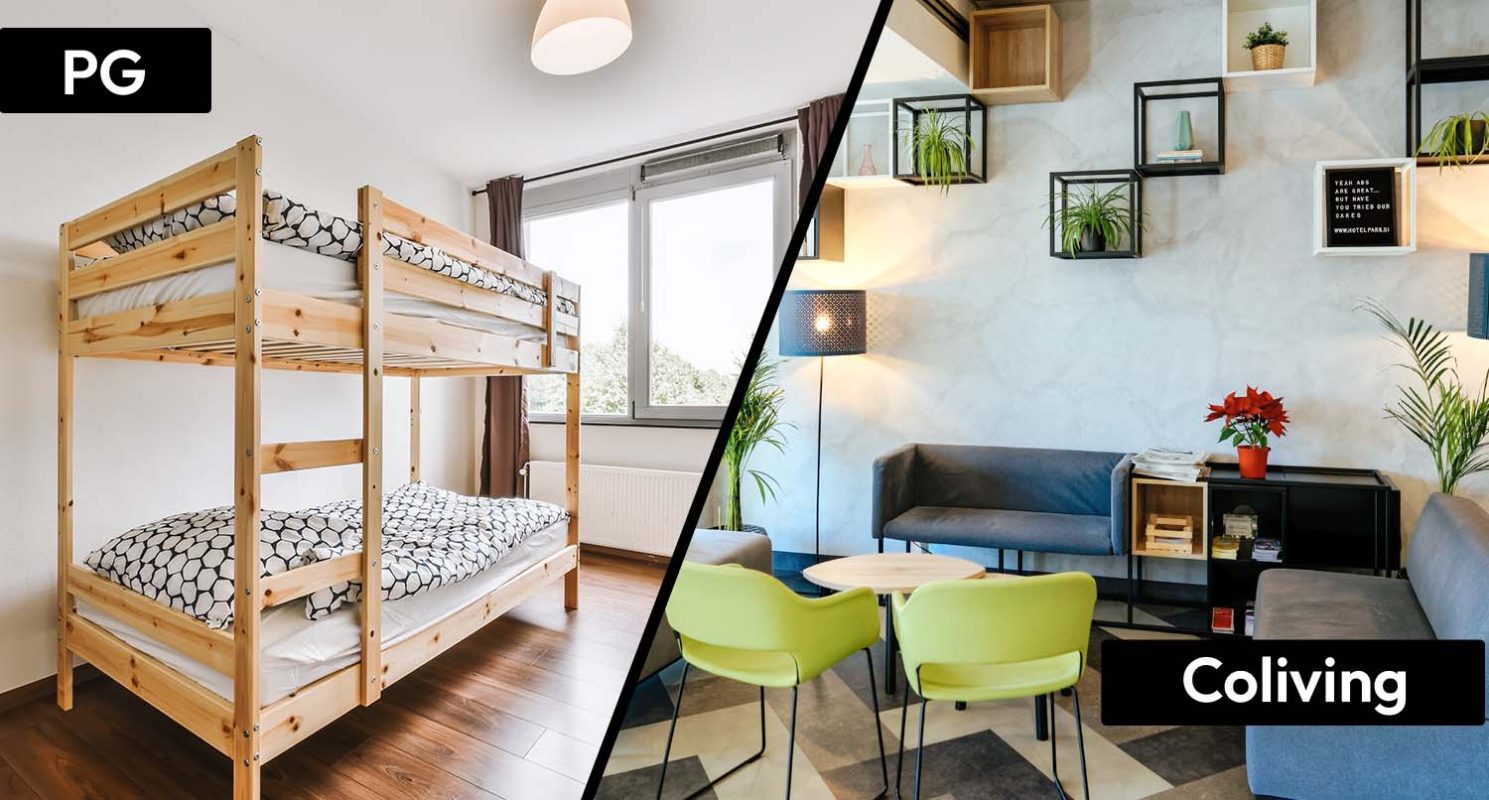
Moving to a new city to build a new life is easier said than done. Such endeavours come with a plethora of challenges, and one of them is choosing a place to live. For students and young professionals, this choice often comes down to co-living vs PG. While they both provide affordable housing, they differ in terms of facilities and lifestyle offered. Selecting between PG vs co-living is predicated on your budget and long-term goals.
This guide explores the difference between PG and coliving and helps you decide which one suits you the best.
What Is Co-living?
Co-living is a shared living space designed for young professionals, digital nomads, and students. These spaces come with fully furnished rooms and a plethora of amenities like high-speed Internet, housekeeping, laundry, recreational areas, cafeterias, and more. Co-living spaces are more focused on maximising the comfort and convenience of their inhabitants while also creating an environment that’s conducive to community building. Residents are encouraged to forge connections and enjoy collaborative experiences. Furthermore, in a co-living vs PG debate, the former offers more flexibility in terms of lease agreements and fewer restrictions on areas like entry and exit timings and food choices.
For those relocating to Pune, a city that has become a magnet for IT professionals and students alike, the search for quality shared housing can feel daunting. Fortunately, coliving in Pune has grown significantly over the past few years, with operators setting up spaces in key hubs like Hinjewadi, Baner, and Wakad. These locations offer easy access to tech parks, universities, and social hotspots, making them particularly attractive for newcomers who want convenience without sacrificing comfort or community.
What Is a PG?
If you’re a student or early-career professional heading to Pune, finding the right PG in Pune requires a bit of homework. Start by shortlisting neighbourhoods close to your college or office, then visit a few properties in person to assess cleanliness, meal quality, and landlord responsiveness. Talking to current tenants can also give you honest insights into daily life at the property. Taking these steps before signing any agreement helps you avoid unpleasant surprises down the line.
Difference between PG and Co-living
1. Management & Professionalism
While weighing the pros and cons of PG, management is a huge differentiator. PGs are mostly managed by individual landlords, which leads to inconsistent services. On the other hand, co-living spaces are run by professional operators who ensure timely maintenance, satisfactory customer service, and high standards of facilities. This makes co-living a more attractive option in the co-living vs PG comparison.
2. Amenities & Facilities
In a PG vs coliving debate, tenants with bare minimum requirements will opt for the former. That’s because PGs offer only essentials like meals and housekeeping, while coliving provides amenities like high-speed Wi-Fi, coworking zones, gyms, gaming areas, and more. For students and young professionals who want to save money and are content with basic facilities, they’re more likely to opt for PG, while those who want more amenities may prefer co-living—this is a major difference between PG and co-living.
3. Lease Flexibility
In a co-living vs PG scenario, lease flexibility is a major factor. PGs often require fixed commitments, usually monthly or quarterly. On the flip side, co-living spaces are more flexible with their lease and allow residents to stay for a week or extend longer. For people who are unsure about living in a place for too long, they would prefer co-living, while for those not wanting to migrate to a different location in the short term, PG is a viable option.
4. Cost & Value
One of the most significant parameters that delineates the difference between PG and co-living is the cost factor. Generally, PGs are more budget-friendly and, therefore, a more attractive option for tenants seeking to cut back on expenses. On the other hand, co-living can have a higher rent, but they offer more value for money. Co-living spaces come with more comfort, facilities, and community benefits. Choosing co-living vs PG depends on whether you prioritise savings or lifestyle.
5. Privacy vs Community
Privacy is an important factor to consider while making a choice between co-living vs PG. Personal space is limited in PGs, as these are shared accommodations with strict rules and restrictions. Co-living spaces offer single-occupancy rooms while also providing the opportunity for networking with neighbours through community-based activities, events, and sharing amenities. This difference between PG and co-living makes co-living appealing to those who value both independence and connections.
6. Social & Cultural Fit
If tenants are looking to experience a vibrant community atmosphere, co-living spaces are more suitable for them than PGs. In the co-living vs PG debate, co-living fosters a sense of belonging, whereas PGs are more individual-focused. While PGs may be shared spaces like co-living, they’re not designed to foster networking opportunities or encourage community events and activities.
When to Choose PG vs Coliving
In a co-living vs PG debate, students and young professionals are likely to go for the latter if their main concern is living on a budget. However, for those not willing to compromise on lifestyle and comforts, co-living appears to be a great option. Co-living spaces come with a plethora of amenities that most PGs cannot provide. Therefore, PGs are best for people seeking affordability, while co-living is more suitable for tenants who want more flexibility, freedom, and community experience.
How to Select the Right Option in PG or Coliving
When choosing between co-living vs PG, tenants should consider their priorities. If you need cost-effective housing with basic facilities, PGs are a great option. However, it’s best to check landlord reliability, rules, and hygiene before finalising. On the other hand, if you prefer convenience, privacy, and networking, co-living is ideal. Furthermore, location also matters, as you can save on conveyance if you can find accommodation that’s close to your college or office. Comparing the pros and cons of PG with co-living will help you decide what fits your lifestyle and career needs best.
Conclusion
Both co-living and PGs serve as housing options in India, but they cater to different needs. PGs are budget-friendly, simple, and widely available, whereas co-living offers a premium lifestyle with better management and flexibility. The co-living vs PG choice depends on whether tenants prioritise affordability or more comfortable living. By understanding the difference between PG and co-living, you can make an informed decision that aligns with your budget, lifestyle, and future goals. For students and young professionals, opting for PG makes sense, while for those seeking to maintain a more comfortable lifestyle, co-living spaces are a great option.
FAQs on Coliving vs PG
Why is coliving better than PG?
Co-living is better than PG because it offers professional management, modern amenities, and greater flexibility. Unlike PGs, which often lack consistency, co-living provides a better living experience with community events and networking opportunities. In the co-living vs PG debate, co-living delivers better value for those who want comfort and a sense of belonging.
What is the meaning of coliving in PG?
Co-living in PG refers to upgraded PG-style housing managed professionally. While traditional PGs are run by landlords, co-living combines the affordability of PGs with added facilities like Wi-Fi, coworking spaces, networking opportunities, and social activities. In simple terms, it’s the modern version of PGs in the PG vs co-living discussion.
Can couples stay in coliving PG?
Yes, there are many co-living spaces that allow couples to stay, unlike most PGs that have strict rules. This makes co-living a more flexible and inclusive option. The difference between PG and co-living lies in openness. PGs are restrictive, while co-living accommodates diverse living needs, including couples and working professionals.
Is coliving more expensive than a PG?
Generally, co-living is more expensive than PG, but it provides better value. PGs are cheaper but limited in facilities. Co-living justifies its higher cost with professional management, amenities, and community experiences. When comparing co-living vs PG, you’re essentially choosing between affordability and a more comfortable lifestyle with a higher degree of privacy and freedom.