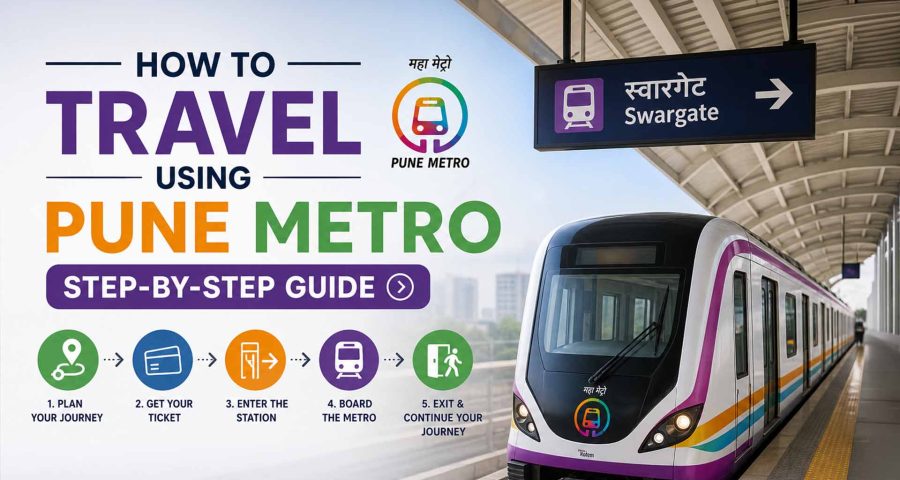
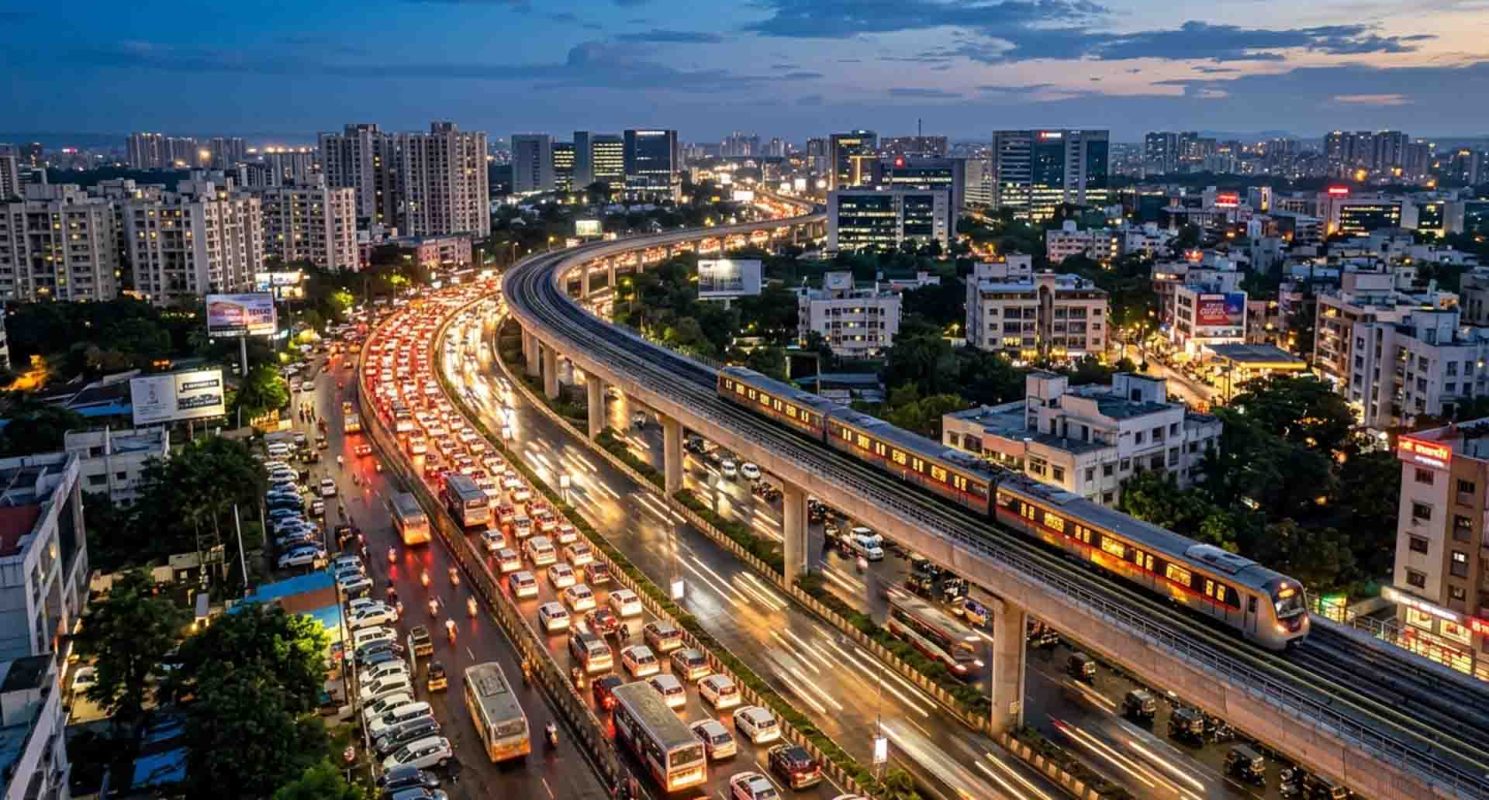
Public transport in Puneis improving fast—2,000 all-electric/CNG buses, a Metro that’s actually clean and air-conditioned, and ambitious expansion plans for 2026.
But if you’re moving here for TCS, Infosys, or one of the 50,000+ IT jobs in Hinjawadi, you need the real story on how this system works—and more importantly, where it fails you at 8:30 AM on a Tuesday.
Public Transport in Pune: Quick Overview
| Mode | Best For | Monthly Cost Range | Main Limitation |
|---|---|---|---|
| Metro | Long central routes | ₹1,000–3,000 | Limited IT hub coverage |
| PMPML Buses | Budget commuting | ₹1,500 pass | Peak crowding |
| Autos | Short distances | ₹2,000–4,000 | Availability at rush hour |
| Cabs | Comfort & late nights | ₹5,000–7,000 | Expensive daily |
The Pune Metro Reality Check: Two Lines, Limited IT Hub Coverage
The metro has improved public transport in Pune significantly.
What Works
- AC coaches
- ₹10–35 distance-based fares
- 6 AM – 11 PM service
- 7–15 minute frequency
For commuters near PCMC, Shivajinagar, or Ramwadi, metro travel is predictable and stress-free.
What’s Limited
- Direct coverage of Hinjawadi interior phases is still developing
- Kharadi access requires additional last-mile transport
- Some IT zones still need a bus/auto connection
Commute Reality Example – Wakad to Hinjawadi Phase 1:
| Leg | Cost |
|---|---|
| Metro segment | ₹20–25 |
| Auto last mile | ₹50–70 |
| Daily roundtrip | ₹140–190 |
| Monthly | ₹2,800–3,800 |
Metro reduces stress. It doesn’t always reduce total cost or time unless you live near a station.
Yukio Tip: If you’re choosing between two otherwise similar properties, proximity to a metro station or major bus stop is worth prioritising — especially as Line 3 and new PMPML routes come online through 2026.
PMPML Buses: The Budget Workhorse Getting a Major Upgrade
PMPML (Pune Mahanagar Parivahan Mahamandal Ltd.) runs the city’s bus backbone: 2,000+ buses, 400+ routes, 2,500 stops across Pune-PCMC.
Routes You’ll Use:
- Bhosari-Hinjawadi: Runs via Wakad, peak frequency 15-20 mins
- Pune Station-Pimple Saudagar: Connects central Pune to Wakad
- Night buses, ladies specials, BRT lanes exist but coverage patchy post-10 PM
Breakdown Of the Fare:
| Fare | Distance | Examples |
| ₹10 | 1–5 km | Wakad to Hinjawadi Phase 1 |
| ₹20 | 5.1–10 km | Baner to Hinjawadi Phase 1 |
| ₹30 | 10.1–15 km | Aundh to Hinjawadi Phase 2 |
| ₹40 | 15.1–20 km | Pune Station to Hinjawadi |
| ₹70 | Daily Pass | Unlimited travel (Pune & PCMC limits) |
| ₹1,500 | Monthly Pass | Unlimited travel (Pune & PCMC limits) |
Source
The Good: 490 electric buses now operational (plus 25 incoming in 2027), cheaper than autos, AC/Rainbow branded options. Operations 5:30 AM-11:30 PM.
The Bad: Peak-hour overcrowding at Hinjawadi stops (20-30 min waits during 8-10 AM rush), breakdowns frequent on hilly Mumbai Highway routes to Phase 1. Stick to AC routes for reliability.
2026 Game-Changer: PMPML’s 2,500-bus addition specifically targets cutting Wakad-Hinjawadi waits to sub-10 minutes, but Q4 rollout means you’re navigating today’s gaps for 9+ months.
Autos & Cabs: The Expensive Last Mile
Auto-Rickshaws (Latest RTA rates):
- Base Fare (First 1.5km): ₹31.00
- Per Km Rate (After 1.5km): ₹17.00
- Waiting Charges: ₹1.00 per minute (60 seconds)
- Night Surcharge (12 AM – 5 AM): 25% extra on meter
Meters are mandatory (calibrated). In theory, no haggling; in practice, expect refusals during Hinjawadi’s 6-8 PM office exodus when the surge hits 20-50%.
Cabs (app-based, govt-regulated since May 2025):
- ₹35-37 first 1.5 km, after that ₹28/km (Hatchback) and ₹31/km (Sedan)
- Waiting: ₹1.5/min
- Example: 10 km (Wakad to Hinjawadi Phase 1) = ~₹310, or ₹6,000-7,000/month for daily commutes
45,000+ vehicles via OnlyMeter platform; no surge pricing, reliable for families/airport runs, but cost-prohibitive for daily IT commutes. If you’re spending ₹6,000 on cabs monthly, that’s money better allocated elsewhere—like living closer.
Yukio Tip: If your monthly cab spend is consistently high, that’s usually a signal that your housing location needs a rethink — not that cabs are the right long-term solution.
The Commute Math That Matters: Rent vs. Location
Let’s say you’re joining Infosys Hinjawadi Phase 1 at ₹8 LPA (₹66,666/month). Here’s a real cost breakdown of local transport in Pune:
| Living Area | Distance to Phase 1 | Transport Cost/Month | Rent (1BHK/PG) | Total Housing |
|---|---|---|---|---|
| Hinjawadi Phase 1 | Walking distance | ₹0 (15-min walk) | ₹18,000-22,000 | ₹18,000-22,000 |
| Wakad | 5-7 km | ₹1,500–2,500 (Metro+Auto) | ₹15,000-18,000 | ₹17,800-20,800 |
| Baner | 10 km | ₹4,500 (Cab/Bus) | ₹16,000-20,000 | ₹20,500-24,500 |
Hinjawadi Phase 3 and Wakad both sit within a broadly 10–15 minute commute of their respective IT parks — making them genuinely practical bases, not compromises. Phase 3 townships like Megapolis and Blue Ridge offer gated community infrastructure alongside that proximity. Wakad adds better social and retail infrastructure to the equation.
Beyond cost, consider time: a 35–40 minute peak commute from a farther location adds up to 10+ hours a week in transit — the equivalent of an entire workweek lost every month.
For professionals planning longer stays, commute minimisation is a quality-of-life decision as much as a budget one.
Meanwhile, Yukio Coliving’s Hinjawadi properties sit 2-3 km from Phase 1 offices (TCS, Infosys, Wipro), translating to 10-15 minute bike rides or 20-minute walks.
Navigating Public Transport in Pune Like a Local
If you’re new, follow these rules:
- Live near either your office or a major metro/bus node
- Use buses for predictable long routes
- Use autos for short, fixed distances
- Avoid daily cab dependency
- Always factor peak-hour buffers
Public transport in Pune works best when it’s part of a structured routine. If every day requires transport improvisation, stress compounds quickly.
Public Transport in Pune Is Improving — But Location Still Wins
The metro is expanding. Buses are modernizing. Autos are digitizing. Public transport in Pune will keep getting better. But until every IT corridor has seamless coverage, the most practical strategy is simple: reduce your dependency on daily long commutes.
Choose housing with intent. Structure your route. Reclaim your time.
That’s how local transport in Pune becomes manageable — not overwhelming.
Frequently Asked Questions
What is the cheapest way to commute daily in Pune?
PMPML buses with a monthly pass (~₹1,500) remain the most affordable option.
Does Pune Metro connect directly to Hinjawadi offices?
Metro connectivity is expanding, but some office phases still require last-mile transport.
Are autos reliable for IT commutes?
For short distances, yes. During peak hours, availability may drop.
Is living near the office worth the higher rent?
Often yes. Reduced transport cost and time can offset the rent difference while improving routine stability.