Pune offers young professionals a significantly more affordable lifestyle than Mumbai or Delhi — but only if you know which trade-offs matter, which neighborhoods work for your commute, and what the city actually looks like beyond the salary calculator.
This living in Pune guide covers the full picture: costs, areas, weather, lifestyle, and the practical decisions that determine whether relocating here makes financial and personal sense.
The Cost Reality: What Your Salary Actually Buys
According to 2026 cost of living data, comfortable living for a single professional in Pune requires ₹30,000-₹40,000 monthly. Here’s how that breaks down:
| Expense Category | Monthly Cost | Notes |
|---|---|---|
| Housing (Managed Coliving) | ₹19,000-₹25,000 | All-inclusive: meals, Wi-Fi, housekeeping |
| Housing (1BHK) | ₹12,000-₹25,000 | Location-dependent; city center higher |
| Housing (PG) | ₹7,000–12,000 | Shared accommodation, meals may vary |
| Food & Groceries | ₹4,000-₹8,000 | Including occasional eating out |
| Transportation | ₹1,000-₹5,000 | Buses, autos, app-cabs |
| Utilities | ₹1,500-₹4,000 | Electricity, water, internet |
| Lifestyle/Entertainment | ₹1,500-₹5,000 | Gym, outings, subscriptions |
| Total Range | ₹19,500-₹49,000 | Basic to above-average lifestyle |
Source: GoDigit Expense Breakdown
IT salaries in Pune vary widely depending on experience and role — from ₹4–6 LPA for freshers to ₹15–25 LPA for mid-senior professionals. As a general rule, this living in Pune guide recommends keeping housing to 30–40% of your in-hand salary to leave room for savings and lifestyle flexibility.
Yukio’s Tip:
Calculate your post-rent budget before accepting an offer. If housing takes more than 50% of your in-hand salary, you’ll struggle with lifestyle flexibility and savings goals. Aim for 30-40% max.
Pune Weather: What to Actually Expect
Pune’s climate is one of its most underrated advantages — moderate year-round compared to Delhi’s extremes or Mumbai’s humidity.
- October–February: Pleasant and dry, 10–25°C. The most comfortable period for settling in.
- March–May: Warm but manageable, 25–38°C. Significantly milder than north Indian summers.
- June–September (Monsoon): Moderate to heavy rainfall. Hinjawadi and western areas can see waterlogging during peak showers. Build extra commute time and keep rain gear handy.
Best Areas to Live in Pune: A Neighborhood Guide
Where you live shapes everything — commute, social life, rent, and daily convenience.
| Area | Best For | Rent Level | Commute to IT Hubs |
|---|---|---|---|
| Hinjawadi Phase 2 & 3 | IT proximity | Medium–High | Short (10–15 mins) |
| Wakad | Balance of commute and lifestyle | Medium | Moderate (15–25 mins) |
| Baner & Aundh | Lifestyle and social scene | High | Moderate (25–35 mins) |
| Kothrud & Deccan | Old Pune character, quieter pace | Medium | Moderate–Long |
| Koregaon Park & Viman Nagar | Central access, nightlife | High | Moderate–Long |
| Kharadi | East Pune IT roles (EON IT Park) | Medium | Short for East Pune |
Lifestyle and Weekend Culture
Pune consistently surprises newcomers with how much it offers beyond work.
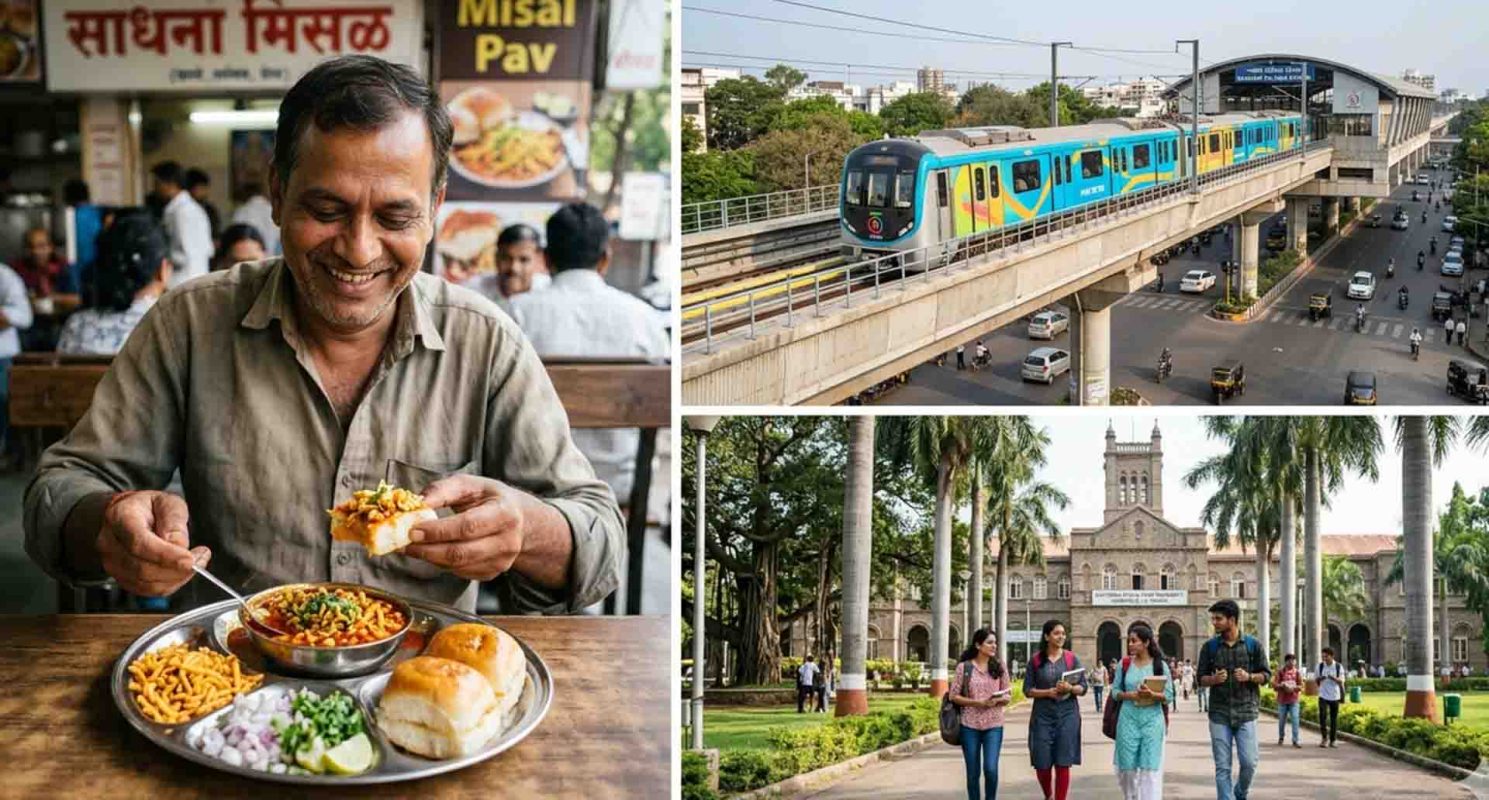
- Food scene: From Maharashtrian street food on FC Road and Tilak Road to international restaurants in Koregaon Park and Baner — the city eats well at every budget.
- Trekking and outdoors: Sinhagad, Rajgad, Lohagad, and Tikona are all within 1–2 hours. Weekend trek culture among young professionals is strong and well-organised.
- Weekend getaways: Lonavala (65 km), Lavasa (60 km), Mulshi (45 km), and Mahabaleshwar (120 km) are all accessible in under two hours — making Pune one of India’s best-positioned cities for weekend escapes.
- Social scene: Koregaon Park and Baner lead the café and bar scene. Live music and community events are regular. The crowd skews young professional, making it easier to build a social network than in most comparable cities.
Pros: Why Professionals Choose Pune
Affordability Compared to Mumbai/Delhi
A 1BHK in central Pune averages ₹18,000–23,000 vs. ₹35,000+ in comparable Mumbai areas. That gap translates directly into disposable income and savings potential.
Career Opportunities in IT & Education
Strong employment across IT, manufacturing, education, and startups — concentrated in Hinjawadi, Viman Nagar, and Kharadi. A reliable long-term career base with a growing talent ecosystem.
Cultural Richness & Green Spaces
Shaniwar Wada, Aga Khan Palace, a thriving café culture, live music, and accessible trekking spots like Sinhagad and Rajgad. Pune delivers genuine work-life balance options.
Lower Living Costs Enable Savings
Comfortable monthly expenses of ₹25,000-₹35,000 for singles mean you can actually save 20-30% of your salary here, which is nearly impossible in Mumbai on similar packages.
Cons: The Challenges Nobody Mentions Upfront
Traffic Congestion in Key Employment Zones
Hinjawadi, Nagar Road, and Baner see heavy congestion during 8:30–10:30 AM and 6–8 PM. One of the most important living in Pune tips: don’t live far from work just to save on rent — commute costs in time and transport often cancel the savings.
Water Supply Issues
Pune’s infrastructure struggles with consistent water delivery, particularly in rapidly developed areas. Summer months often require tank water purchases, adding unexpected costs.
Limited & Non-Integrated Public Transport
Unlike Mumbai’s local trains or Delhi’s metro, Pune’s PMPML bus system is fragmented. Most professionals rely on two-wheelers or app-based cabs, pushing monthly transport costs toward the ₹3,000-₹5,000 upper range.
Rising Costs in Popular Neighborhoods
Premium areas like Koregaon Park see 2BHK rents exceeding ₹40,000, and even mid-tier neighborhoods experience 5-8% annual rent increases as Pune’s popularity grows.
Yukio’s Tip:
Before signing a PG or rental agreement, visit during evening peak hours (6-8 PM) to check water pressure and power backup. Infrastructure issues reveal themselves under load, not during your sunny afternoon visit.
Common Mistakes When Moving to Pune
Relocating to a new city comes with a learning curve. These are the errors most professionals make in the first few months — and how to avoid them:
- Choosing the cheapest rent without factoring in commute A lower headline rent rarely stays low once daily transport costs and time are added. Living 15 km from your office to save ₹3,000 on rent often costs more in autos, cabs, and lost hours every week.
- Underestimating setup costs Brokerage, security deposit, furniture, and utility setup can add ₹50,000–80,000 before your first month is out. Budget for this separately before signing anything.
- Not visiting during peak hours A property that looks fine at noon can feel very different during a 7 AM shower rush or an 8:30 PM power cut. Visit during evening peak hours to check water pressure, power backup, and Wi-Fi reliability under load.
- Assuming “all-inclusive” means everything is included Meals, laundry, electricity, and maintenance are frequently excluded from headline rents even when listings say “all-inclusive.” Always ask for an itemised breakdown before comparing options.
- Signing long lock-ins before you know the area Committing to a 6–12 month lease before you’ve experienced your commute, neighbourhood, and work schedule is a common and avoidable mistake. Where possible, start with a shorter commitment and extend once you’re settled.
- Relying on public transport before checking your specific route Pune’s PMPML coverage is uneven. Some IT corridor routes are well-served; others require autos or cabs for the last mile. Verify your specific commute route before assuming bus connectivity will work for your schedule.
Living in Pune Tips from Yukio: Location vs. Budget Trade-offs
| Option | Best For | Watch Out For |
|---|---|---|
| Budget PG (₹7,000–12,000) | Fresh graduates, short stays | Variable quality, restrictive rules |
| 1BHK Rental (₹12,000–25,000+) | Couples, those wanting privacy | Broker fees, deposits, utility extras |
| Managed Coliving (₹19,000–25,000) | Working professionals, new relocators | Less privacy than a solo apartment |
Yukio’s Tip:
Factor “time cost” into rent decisions. Spending an extra ₹3,000/month to save 1.5 hours daily on commute equals 45 hours/month freed up, which is roughly ₹67/hour if you value your time at minimum wage. On a professional salary, the ROI is obvious.
Making the Move to Pune Work for You
Apply these living in Pune tips early: choose your neighborhood based on your office location, budget honestly for hidden costs, and treat your housing setup as a foundation for your routine — not an afterthought.
Get those decisions right from the start, and Pune quickly stops feeling like an adjustment and starts feeling like a genuinely good place to build a career. Explore Yukio’s Hinjawadi and Wakad properties to see floor plans, meal menus, and current occupancy; transparency beats surprises every time.
Frequently Asked Questions
Q. What’s the minimum monthly budget for living in Pune as a single professional?
₹20,000/month covers basics, including a shared PG (₹8,000), food (₹6,000), transport (₹3,000), and essentials (₹3,000), but limits social life and savings. Comfortable living requires ₹30,000-₹40,000 for work-life balance.
Q. Which areas are best for IT professionals in Pune?
Hinjawadi and Wakad dominate for IT jobs, with 10-20 minute commutes to major tech parks. Viman Nagar works for central Pune roles. Koregaon Park offers lifestyle appeal but at premium rents (₹25,000+ for 1BHK). One of our top living in Pune tips is to choose based on your office location first.
Q. How does Pune’s cost of living compare to Mumbai or Bangalore?
Pune’s ₹25,000-₹45,000 single-person budget runs 30-40% lower than Mumbai’s equivalent lifestyle and 15-20% below Bangalore. 1BHK rent averages ₹18,000 vs. Mumbai’s ₹35,000+, making Pune the value choice for professionals prioritizing savings.
Q. Is coliving worth it compared to a PG or 1BHK in Pune?
For most working professionals, yes — once you account for meals, transport, utilities, and setup costs not included in PG rent. The actual monthly spend gap is often narrower than headline figures suggest, with meaningfully better living conditions and zero setup friction.