Most people won’t tell you this when you’re considering that Hinjawadi job offer: Pune’s actually famous for things that have nothing to do with IT parks. Sure, you might be coding 9-to-7 in Phase 1. But come Saturday morning, you could be taking a 17th-century trek to Sinhagad Fort that’s legitimately worth the early alarm.
What makes Pune famous has less to do with it being the “Oxford of the East” and more to do with the fact that you can climb 103 steps to Parvati Hill temples, hit Koregaon Park cafes after, and still make it home before the sun sets. This isn’t a travel guide; it’s what actually matters when you’re living here.
Quick Answer: What Is Pune Famous For?
- Shaniwar Wada – 1732 Peshwa fort and the historic heart of old Pune
- Sinhagad Fort – Weekend treks with real Maratha history attached
- Parvati Hill – 103 steps and sunrise views locals swear by
- Pataleshwar Cave Temple – 8th-century rock-cut Shiva temple in the city center
- Dagdusheth Halwai Ganpati – Pune’s most iconic Ganesh temple
- Ganesh Chaturthi celebrations – Deeply rooted, city-wide community festival
- Misal Pav & Mastani – Signature Pune food staples
- Koregaon Park café culture – Alfresco dining, specialty coffee, weekend hangouts
- Osho Ashram – International meditation and spiritual tourism hub
- Pleasant October–February weather – The season that makes outdoor life easy
Now let’s unpack why these actually matter when you’re living here, and not just visiting for a weekend.
The Peshwa Legacy: Why Pune City is Famous for More Than Tech Parks
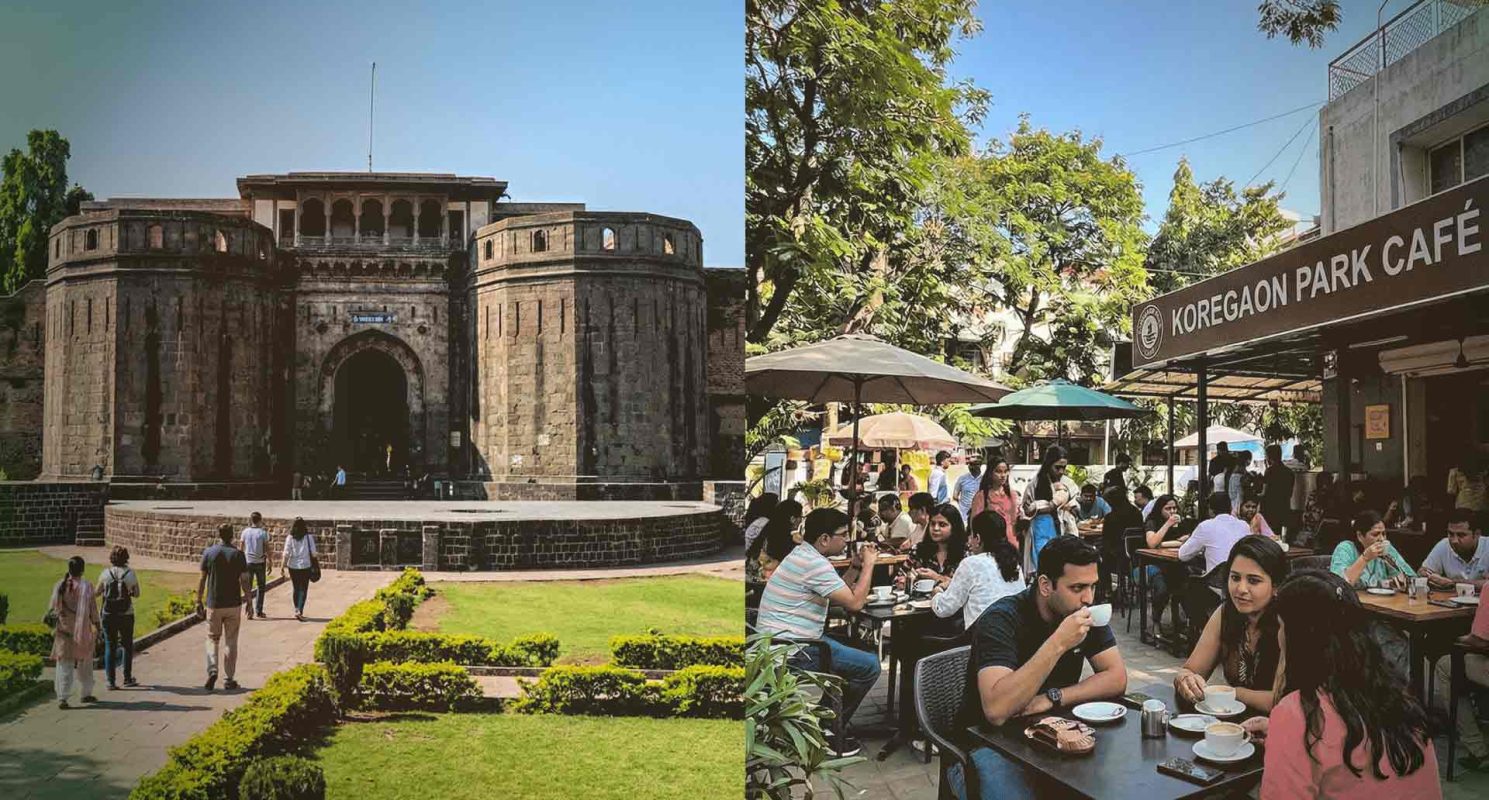
What is Pune city famous for historically? Start with Shaniwar Wada, the 1732 Peshwa fortification that’s still the geographic heart of old Pune. It’s right at the city center, which matters when you’re planning a weekend that doesn’t involve cab surge pricing. The evening light-and-sound show after 7 PM is your move if you’re dodging the 35-42°C summer heat (March-May gets brutal).
Pune’s cultural depth runs deeper than just one fort. The 8th-century Pataleshwar Cave Temple, 1-4 km from the city center, is a rock-cut Shiva temple that predates most Indian cities. Then there’s Dagdusheth Halwai Ganpati, where Ganesh Chaturthi is the real deal with locals who’ve been coming here for generations.
Key Cultural Sites at a Glance:
| Site | Distance from Center | Entry Fee | Why It Matters |
|---|---|---|---|
| Shaniwar Wada | 0 km | ~₹10 | Maratha history epicenter |
| Pataleshwar Cave | 1-4 km | Free | 8th-century architecture |
| Dagdusheth Ganpati | 0-4 km | Free | Living religious tradition |
| Aga Khan Palace | 6 km | ~₹10 | Gandhi Memorial, gardens |
For young professionals, the takeaway: most major cultural sites are central and cost ₹0-50 to enter. You won’t break the bank to understand what makes this city tick.
Pune on a Plate: What the City Actually Tastes Like
You can’t talk about what Pune is famous for without talking about what it eats.
- Let’s start with misal pav. Not the watered-down version you’ll find outside Maharashtra, but the spicy, oil-topped, farsan-loaded breakfast that fuels half the city before 10 AM. It’s messy, cheap (₹60–₹120), and best eaten standing at a decades-old joint where the owner doesn’t believe in small portions.
- Then there’s Mastani. Part milkshake, part dessert, fully unapologetic. Thick enough to require patience, topped with dry fruits or ice cream, and named after Bajirao’s legendary love story. Summer afternoons make more sense once you’ve had one.
- Bhakarwadi is the snack you’ll carry home “for later” and finish on the same day. Crunchy, sweet-spicy spirals that somehow work with both chai and late-night coding sessions.
The point isn’t just the dishes. It’s the rhythm. Weekend breakfasts stretch longer here. Office teams debate the “best misal” like it’s a civic responsibility. Food in Pune isn’t a trend; it’s routine.
Ganesh Chaturthi: When the City Feels Personal
If you really want to understand Pune, be here during Ganesh Chaturthi. Yes, Mumbai celebrates big. But Pune celebrates deeply!
Neighborhood mandals spend months preparing. Streets near Laxmi Road and Dagdusheth Halwai Ganpati transform into glowing corridors of lights, music, and slow-moving crowds. Families who’ve lived here for generations show up every evening. Young professionals join after work, still in office badges, folding into something much older than their job titles.
The immersion processions are loud, emotional, and surprisingly organized. Drums echo through narrow lanes. Strangers share water bottles. Auto drivers pause routes to let processions pass. It’s not just a festival; it’s a reminder that this city still runs on community memory. And for newcomers, it’s one of the fastest ways to feel like you’re part of something bigger than your apartment lease.
Pune’s Social Scene: Where Young Professionals Actually Hang Out
Koregaon Park is where Pune’s 22-34 crowd actually lives on weekends. Think alfresco restaurants with leaves for a canopy, specialty coffee that doesn’t taste like Nescafé, and lively bars that don’t close at 11 PM. It’s located 4 km from the Osho Ashram, which draws a huge global crowd for meditation retreats. Even if you’re not the spiritual type, the area’s cafe culture thrives on the spillover.
For the outdoors-inclined: Parvati Hill’s 103-step climb offers 360° city views at sunrise. Locals do this daily as a fitness routine—it’s free, takes 20 minutes, and beats any gym with a view. Weekend warriors head to Sinhagad Fort, 6-20 km out, depending on which route you take. The monsoon season (June-September) turns these treks misty and dramatic, though paths get slippery, so carry rain gear or risk becoming a cautionary tale.
Yukio’s List of Underrated lifestyle spots:
- Laxmi Road (near Shaniwar Wada): Delectable street food, Ganpati idol shopping during festival season
- Okayama Friendship Garden (Sinhagad Road): 10-acre Japanese-style park, cherry blossoms in February
- Rajiv Gandhi Zoological Park: 130 acres, decent for family visits if you have relatives coming to “see how you’re settling in”
The social scene suits people who want history-meets-modernity without the chaos or traffic apocalypse of other metro cities.
The Weather Equation: When October-February Makes Everything Better
Winter (October-February) is when Pune is at its peak. Temperatures hover around 15-28°C, cool enough for fort treks, comfortable enough for cafe patios. This is what makes Pune city famous for its lifestyle: outdoor festivals like NH7 Weekender or Ganpati processions, flea markets, garden brunches, and Koregaon Park evenings that don’t require AC.
Summer (March-May) hits 30-40°C. Indoor activities spike, and museums like Raja Dinkar Kelkar (15,000 artifacts of Maratha history) suddenly look appealing.
Monsoon (June-September) is polarizing. Heavy rains green up everything, but flood spots like Vetal Tekdi trail.
Yukio Suggests:
- Best months for newcomers: October-February (settling in is easier when you can actually explore)
- Worst months: April-May (apartment-hunting in 40°C heat is character-building)
- Wildcard months: June-September (cheaper rents due to monsoon, but commute from Hinjawadi gets interesting)
The Hinjawadi Reality Check: Living Where You Work vs. Where You’d Want To
Here’s where the math gets complicated. Most cultural sites, such as Shaniwar Wada, Parvati Hill, and Osho, cluster in the central area. Hinjawadi IT parks? 20-25 km out. You’re choosing between a 10-minute commute to TCS/Infosys or weekend spontaneity in Koregaon Park.
This balance between culture and commute is what shapes housing decisions for many professionals. Coliving offers a practical middle ground. Yukio Coliving’s Hinjawadi properties put you 3-5 km from major offices with included meals, housekeeping, and a built-in community (to plan weekend hikes and much more). Starting around ₹20k all-inclusive means you’re paying roughly what a standard PG+food+transport set-up might cost, except you’re also living with 200+ like-minded professionals who also want to hit Parvati Hill at sunrise or split an Uber to Koregaon Park.
Yes, perhaps you’re not centrally located, but you’re also not spending Saturday mornings coordinating logistics. Your Yukio community plans various events, indoor amenities keep you engaged and entertained during monsoon months, and proximity to PMPML routes keeps central Pune accessible without ride-share surge pricing every weekend.
Why Pune Grows on You (And Why People End Up Staying)
Pune is famous not because it shouts about itself, but because it quietly gets the balance right. A city where Maratha history, everyday rituals, and weekend treks coexist comfortably with startup jobs, cafe culture, and decent weather for half the year.
You can live close to work, escape to forts on Sundays, and still feel connected to something older and more grounded than your office ID card. Pune doesn’t try to impress loudly; it just grows on you without knowing, and that’s exactly why people end up staying.
FAQs
What is the best time to visit or explore Pune?
October to February offers ideal weather (15-28°C) for exploring cultural sites and settling in. Avoid excursions during April-May, when it’s peak summer, and temperatures tend to hit 40°C.
What is Pune most famous for culturally?
Maratha heritage via Shaniwar Wada (1732 Peshwa fort), ancient religious sites like the 8th-century Pataleshwar Cave Temple, and modern spiritual tourism centered on Osho Ashram. The blend of 300-year-old forts and global meditation retreats 4 km apart is uniquely Pune.
Where should young professionals live in Pune?
Depends on your office. Hinjawadi workers benefit from nearby co-living (like Yukio) to avoid 90-minute commutes. If your office is centrally located, Koregaon Park or Shivajinagar offer cafe culture and nightlife. But always prioritize commute over “cool neighborhoods.” Pune traffic can make daily 20+ km trips unsustainable.